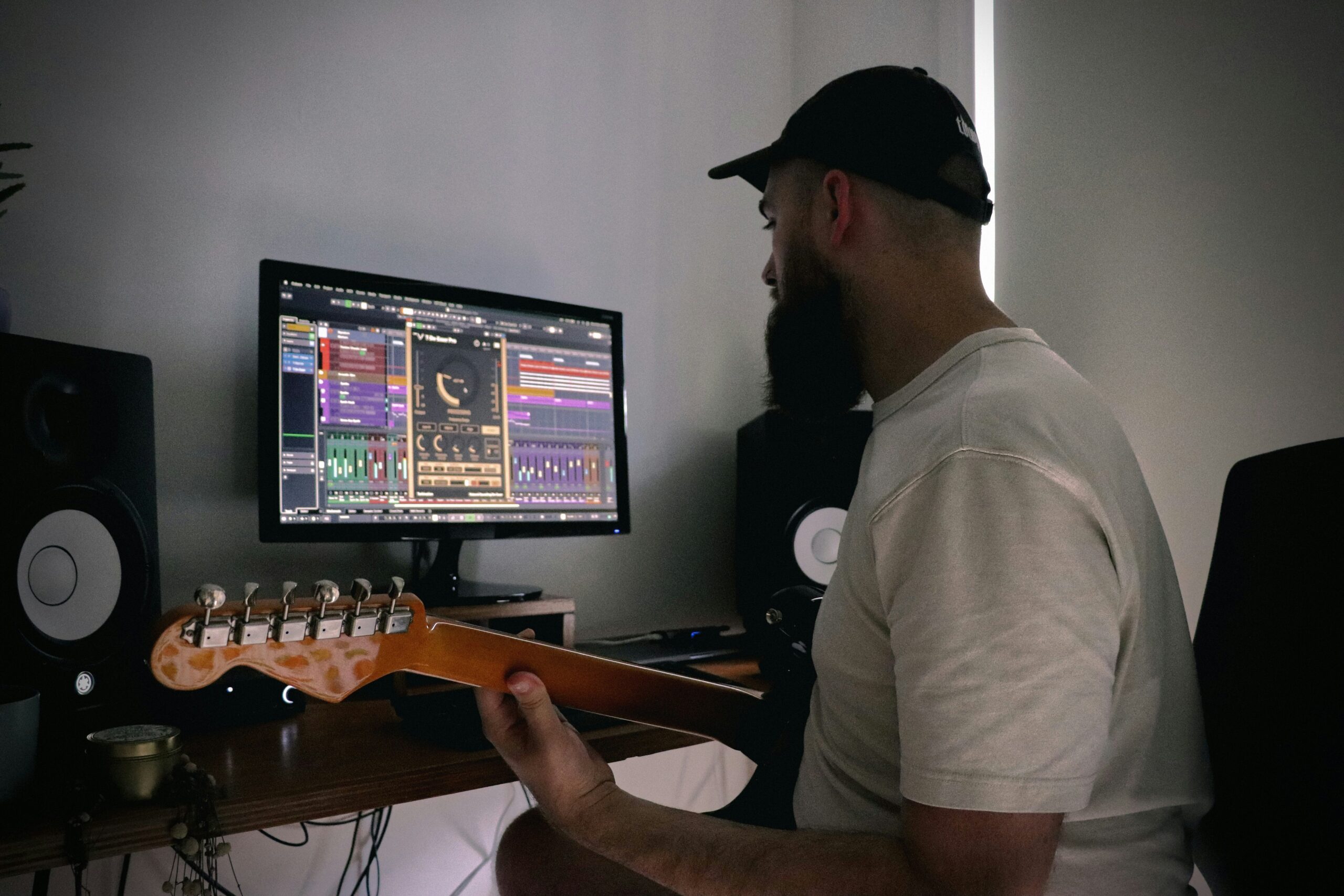
Many people enter music production because they love music and want to create songs that connect with listeners. Today, software and digital tools make music production easier than ever. However, technology alone does not create great music. Strong musical knowledge still plays a major role in professional production. Because of this, many producers choose to learn instruments that improve their creative skills. Among all instruments, the guitar remains one of the best choices.
Guitar skills help producers understand music practically and creatively. A producer who plays guitar often develops better rhythm, stronger melodies, and more emotional songs. In addition, guitar practice builds confidence and improves songwriting abilities. Many successful producers started as guitar players before they entered the world of music production. As a result, they learned how to shape songs with more depth and feeling.
Music production involves much more than using plugins and editing audio files. Producers need creativity, timing, and emotional awareness. Guitar skills support all these areas. Therefore, learning guitar can help any producer create music that sounds more natural and professional.
Guitar Skills Build Strong Music Theory Knowledge
Music theory gives producers a foundation for writing and arranging songs. However, many beginners struggle to understand theory when they only read books or watch tutorials. Guitar skills make music theory easier because players can see and hear notes, scales, and chords directly on the instrument.
When producers learn guitar chords, they also learn how harmony works in real songs. They understand how major and minor chords affect mood and emotion. In addition, guitar players often learn scales that help them create stronger melodies and solos. Because of this, producers can build songs with more confidence and creativity.
Guitar skills also improve understanding of chord progressions. Producers who know common progressions can write songs faster and avoid weak musical ideas. Furthermore, they can experiment with different chord combinations to create fresh sounds. This skill becomes very valuable during songwriting and arranging sessions.
Guitar Skills Improve Songwriting Creativity
Songwriting sits at the center of music production. Even the best production tools cannot save a weak song. Therefore, producers need strong creative skills to write music that people remember. Guitar skills support this process because the instrument enables quick, natural idea generation.
Many producers discover melodies and chord progressions while playing guitar casually. Instead of clicking through software presets, they can focus on the emotional side of music. As a result, they often create songs that feel more authentic and personal. Guitar playing also encourages experimentation, which leads to unique musical ideas.
In addition, guitar skills help producers write songs faster. They can test melodies, harmonies, and rhythms immediately without setting up complex production sessions. Because of this, creative flow stays strong during the writing process. Producers who play guitar often finish ideas more efficiently than those who depend only on computers.
Guitar Skills Strengthen Rhythm and Timing
Rhythm shapes the energy and movement of every song. Producers must understand timing to create professional tracks. Guitar skills improve rhythm because players constantly practice timing, strumming, and groove control.
When guitar players practice with a metronome, they develop stronger beat awareness. This training helps producers build tighter drum patterns and cleaner arrangements. In addition, they learn how rhythm affects emotion and energy inside a track. A strong groove can make music feel exciting, emotional, or relaxed.
Guitar skills also help producers during editing and recording sessions. Producers with rhythm knowledge can quickly identify timing problems in performances. Therefore, they can fix issues while keeping the music natural and smooth. This skill improves overall production quality and enhances the listening experience.
Guitar Skills Help Producers Create Better Melodies
Melodies play a major role in successful music. Listeners often remember the melody before anything else in a song. Because of this, producers need strong melodic skills to stand out in the music industry. Guitar skills naturally support melody creation.
Guitar players learn scales and note relationships through regular practice. As a result, they understand which notes work well together. This knowledge helps producers create catchy hooks and emotional lead parts. In addition, guitar practice improves musical phrasing, which makes melodies feel smoother and more human.
Improvisation also becomes easier with guitar skills. Producers can explore ideas freely and discover fresh melodic patterns while playing. Many great songs start with simple guitar improvisation sessions. Therefore, guitar skills often lead to stronger and more memorable productions.
Guitar Skills Improve Music Arrangement
Arrangement refers to how different parts of a song work together. Producers need to develop arrangement skills to keep music interesting from start to finish. Guitar skills help producers understand song structure because many guitar songs follow clear musical patterns.
While learning songs on guitar, producers study intros, verses, choruses, bridges, and outros. They learn how these sections connect and build energy over time. As a result, they can arrange songs more effectively during production sessions.
Guitar skills also help producers understand balance inside a mix. They learn when to simplify parts and when to add new musical layers. A good arrangement prevents songs from sounding crowded or confusing. Instead, the music feels clean, organized, and emotionally effective.
Guitar Skills Increase Emotional Expression
Emotional connection matters in music production. People remember songs that make them feel something strong. Guitar skills improve emotional expression because the instrument allows for direct, expressive playing.
Techniques such as bends, slides, vibrato, and fingerpicking add emotional detail to music. Producers who understand these techniques often create tracks with greater emotional depth. In addition, they become more sensitive to how sounds affect listeners emotionally.
This awareness influences many production decisions. Producers choose instruments, effects, and arrangements more carefully when they understand emotional expression. As a result, their music feels more human and authentic, rather than overly mechanical.